


Walk Where Our Founders Walked: A Story of Belle Hampton
Over 250 years ago, Revolutionary soldier James Mayo Hoge founded an estate called Hayfield, now known as Belle Hampton. While searching for his brother, a fighter in the French and Indian War, he met his wife, Elizabeth Howe. In 1767, they built their home on this land. James later fought in the Revolutionary War alongside his father-in-law, Joseph Howe, and brother-in-law, Daniel Howe, who settled nearby on Sunnyside. James and Elizabeth had 11 children, including General James Hoge. After James Mayo Hoge died in 1812, General Hoge purchased his siblings’ interests and became the owner of Hayfield.
General James Hoge, known as a “Leader of Men” for his role in the War of 1812, was also an entrepreneur. He turned the farm into a successful agricultural enterprise, selling hemp for rope to the shipping industry and raising cattle. He owned 9,000 acres and had a net worth equivalent to $5 million today. He married his first cousin, Eleanor Howe, who shared the same grandfather, Major Joseph Howe.
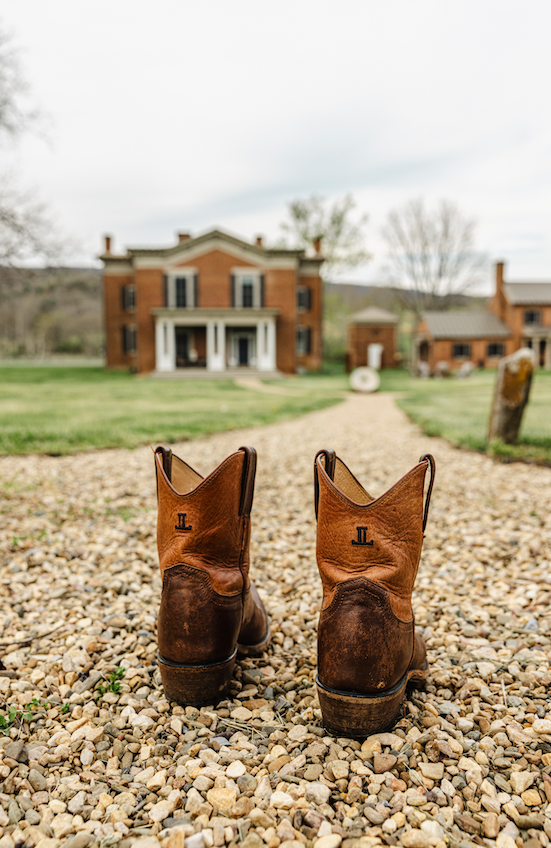
In 1826, General Hoge built the brick main house, along with a smokehouse and a Cooking/Laundry house. As the sole brick building within a 100-mile radius, it drew visitors eager to see the mansion. The original Federal-style home had six rooms and a cellar with an English Kitchen. The central upstairs room is said to be haunted, with stories of footsteps leading to the attic and possible connections to the Civil War or soldiers treated nearby after the Battle of Cloyd’s Farm.
In 1879, Gov.James Hoge Tyler added the front of the house. Tyler was General Hoge’s grandson and the son of Eliza, General Hoge’s only daughter, who died giving birth to him. Raised at Hayfield by his grandparents, Tyler received a strong education, learned farm management, and developed his entrepreneurial skills. At 16, he ran away with friends to join the Confederate Army as a private.After the war, he inherited Hayfield.
Tyler returned to dismantled, unfenced, and worn fields, then restored the property through careful management and hard work. He expanded the house by adding the front, staircase, parlor, and upstairs bedroom. He named the house Belle Hampton in honor of his daughter, Belle, and Sue Hampton. He also raised fine Durham cows and restored the property to its former glory.
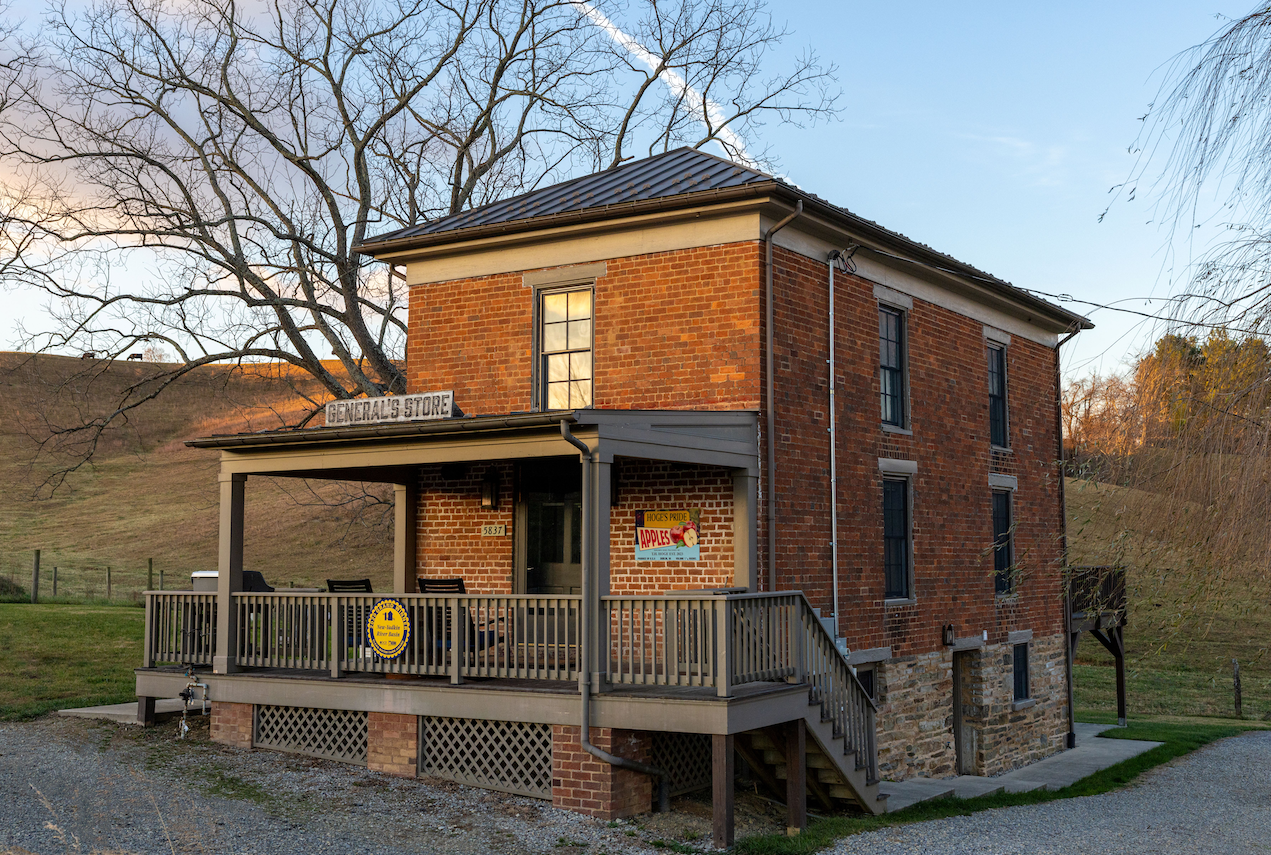
In the late 1800s, Tyler established a General Store and Post Office on the property because of his Belle Hampton Coal Mining business. After making a fortune from coal, he sold the business in 1902. The General Store/Post Office still stands and is now rented as the General’sStore. Tyler also served his community and state as a Virginia Tech board member and rector, state senator, lieutenant governor, and governor from 1898to 1902. In 1891, he moved to Radford, and Belle Hampton became a summer homefor the Tyler family for more than 120 years.
After Tyler’s death, his son S. Heth Tyler inherited the property and developed it into a summer retreat. In the 1930s, he expanded the main house, added a kitchen, and built a garage onto the cooking/cleaning cottage. A pool and tennis court helped create a camp-like atmosphere. Heth Tyler once said it was more affordable to send his children to the farm than to summer camp.
After her mother died, Sue Hammet Tyler, known in the community as “Granny Sue,” inherited Belle Hampton. She loved her summers there, managed the farm, and spent time in her garden. After a long-time friend and farmhand passed away, she eventually lost interest in the property. When Granny Sue died in 2006, Belle Hampton needed urgent repairs. Her daughter, Susan Duerson, inherited the estate, but the property required either significant restoration or sale.
By then, Belle Hampton had been abandoned and was falling into disrepair. Critters and vandal shad entered the property, while Civil War letters and early 1800s books were exposed to moisture, insects, and neglect. Fortunately, the roof remained intact and protected much of what was left.
By chance, Tom Hoge, a great-great-great-grandson of General Hoge, visited the property during his son’s 21st birthday celebration. After touring the buildings and hearing the family history, he returned to Ohio. Later, as Duerson prepared to list the property for sale, Tom called. Having recently celebrated his son’s graduation from Virginia Tech and mourned his father’s death, he felt a strong family connection to Virginia and offered to buy the property to keep it in the family.
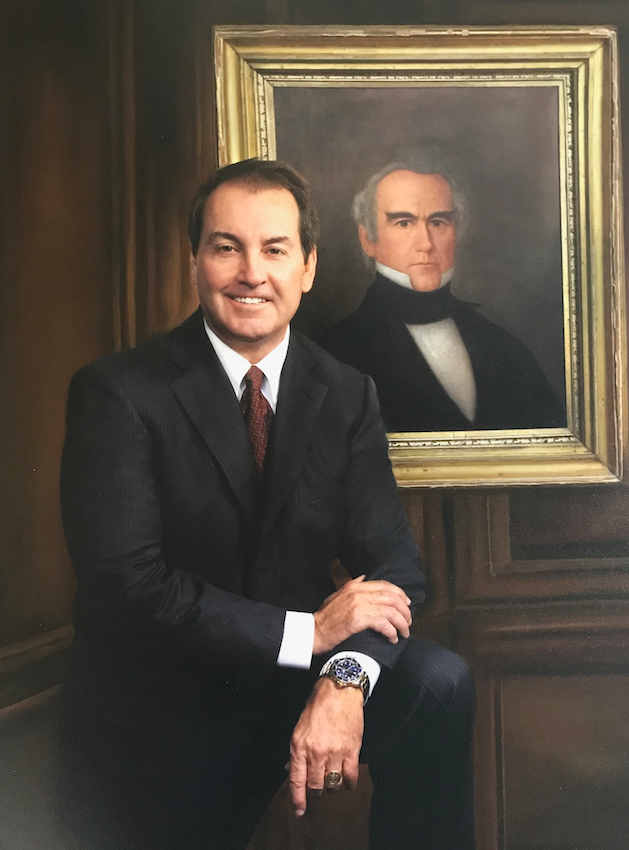
The sale brought relief to the owner and renewed purpose to Belle Hampton. The General’s portrait was presented to the family and now hangs in the Main House foyer. In2016, the cottage was stripped to its structural elements and modernized inside, while the historic exterior was preserved and carefully repointed. The General Store/Post Office was renovated for rental, and the main house was renovated in 2020 and now functions as a Family Office.
As stewards of Belle Hampton, we are committed to sharing this story as a lesson for other family businesses. We believe the “shirt sleeve to shirt sleeve” cycle is not inevitable. Through Family Governance, regular Family Meetings, Rising Generation Development, and work such as the Family Balance Sheet, families can prepare the next generation and improve the odds of sustaining a 250-year vision.
We also established the Belle Hampton Legacy Center, a 501(c)(3) nonprofit based on Belle Hampton Farm. The Legacy Center supports family businesses and farms as they face the question: what comes next? Its work focuses on education, peer support, leadership training, stewardship, values, stories, and enterprise continuity for future generations.
Madeline Hoge