


The Newbern Fires
Newbern was one of the first planned communities in America. Founded by Adam Hance in 1810, Newbern began with 29 lots along the Wilderness Road. Homes, taverns and stores lined the road, welcoming travelers passing through Southwest Virginia. Today it remains as one of the oldest villages along the Wilderness Road.
It's easy to picture the stage coach stop with merchants tending their shops and weary travelers stopping for a meal and a night’s rest. Andrew Jackson, Winfield Scott, and William Clark were reportedly among the notable guests who stayed in the village's taverns.
When Pulaski County was formed in 1839 from portions of Montgomery and Wythe counties, Newbern became its first county seat. The red-brick courthouse, with its white columns, became a center of activity. On court days, residents gathered to conduct business, hear proceedings and exchange news. Behind the courthouse stood the county jail.
Newbern seemed poised for a prosperous future. But the village faced a persistent threat: fire.
Wooden buildings stood close together and access to water was limited making the town one big fire hazard. And, from 1893 to 1924 the village was plagued by fires.
The fate of Newbern and Pulaski County were forever changed on the night of November 27, 1893. The county treasurer and Newbern storekeeper, H.L. Stone, was walking home around 9 p.m. when he noticed flames coming from the top of the courthouse. Any and all available firefighters were called to the scene but with little water supply and resources the courthouse burned to the ground. Interestingly, just months before the fire, a fire-proof vault was placed in the back of the county clerk’s office, saving all the important documents and records.
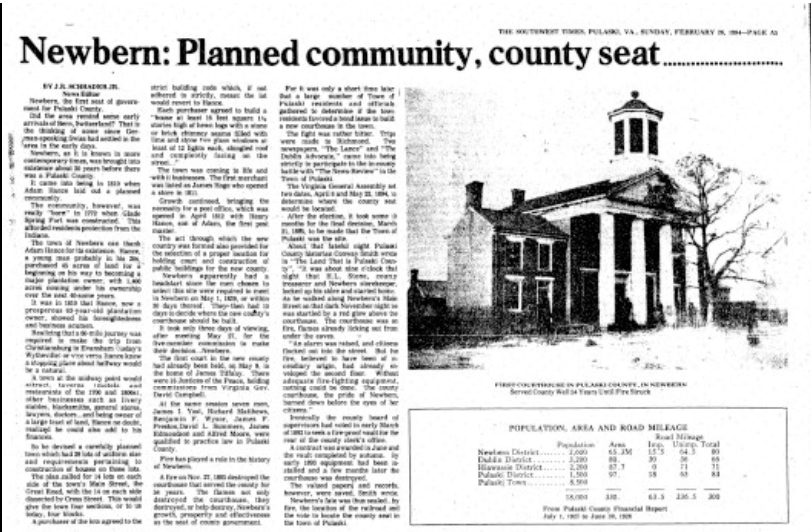
It is hard not wonder how that fire changed the trajectory of Pulaski County. Had it not burned and remained the County Seat, Newbern would likely look very different today.
Just a few years later in 1895 fire struck again when an old hotel building known as a stop for General Andrew Jackson completely burned down. Newbern’s first Methodist church, Dug Spring Methodist, was the next fire victim when the church’s steeple and bell tower were struck by lightning on July 12, 1912.
Then, on the evening of Dec. 4, 1924, fire broke out in an old store building. A faulty flue was blamed.
According to a Southwest Times account, the flames quickly spread to buildings on both sides of the street. By the time the blaze ended, roughly one-fourth of the town lay in ashes. The destruction stretched along approximately 400 feet of street frontage, consuming historic homes and businesses, some dating to Newbern’s earliest days.
In a single evening, generations of the village’s history were lost.
Today, Newbern’s surviving buildings offer a glimpse of the once bustling community that lined Wilderness Road. Among those surviving buildings are the jail and gallows along with the Hance Houses that are now home to Wilderness Road Regional Museum.
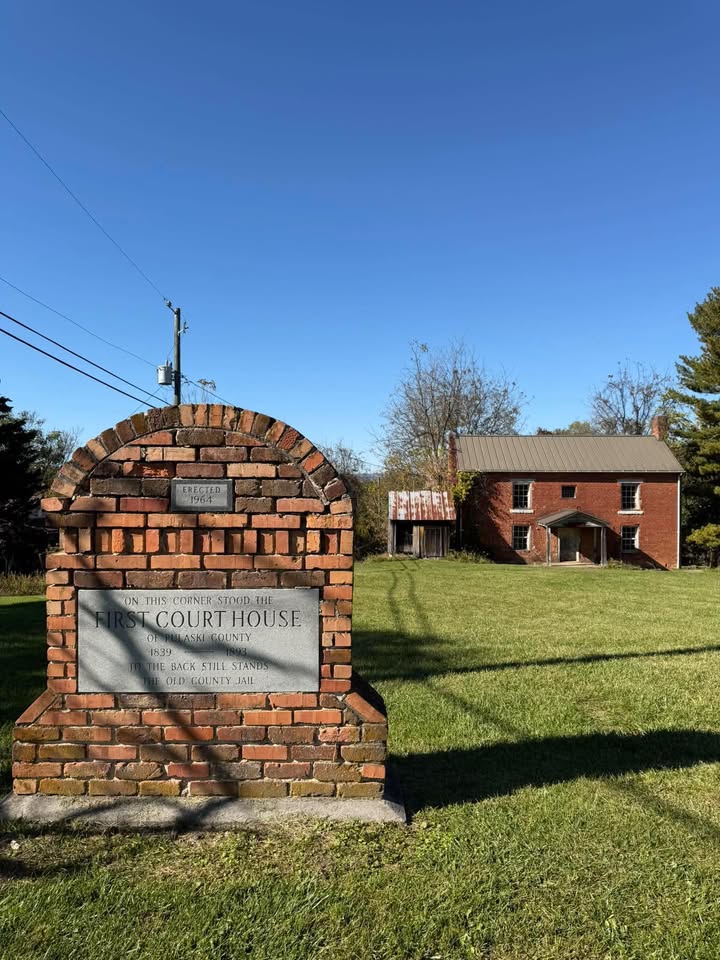
What is left of the Village of Newbern makes us consider something more haunting than a ghost: the memory of what once stood and the possibilities of what could have been.
Written by Erika Tolbert
Sources: Pulaski County, Virginia: An Historic and Descriptive Sketch, 1907–2007 by R. Lloyd Mathews; historical reporting from The Southwest Times; Wilderness Road Regional Museum.